
The Perth Small Laundry Conversion Audit: |
Unlock the secrets behind Perth's small laundry conversions & maximize your space efficiently. |
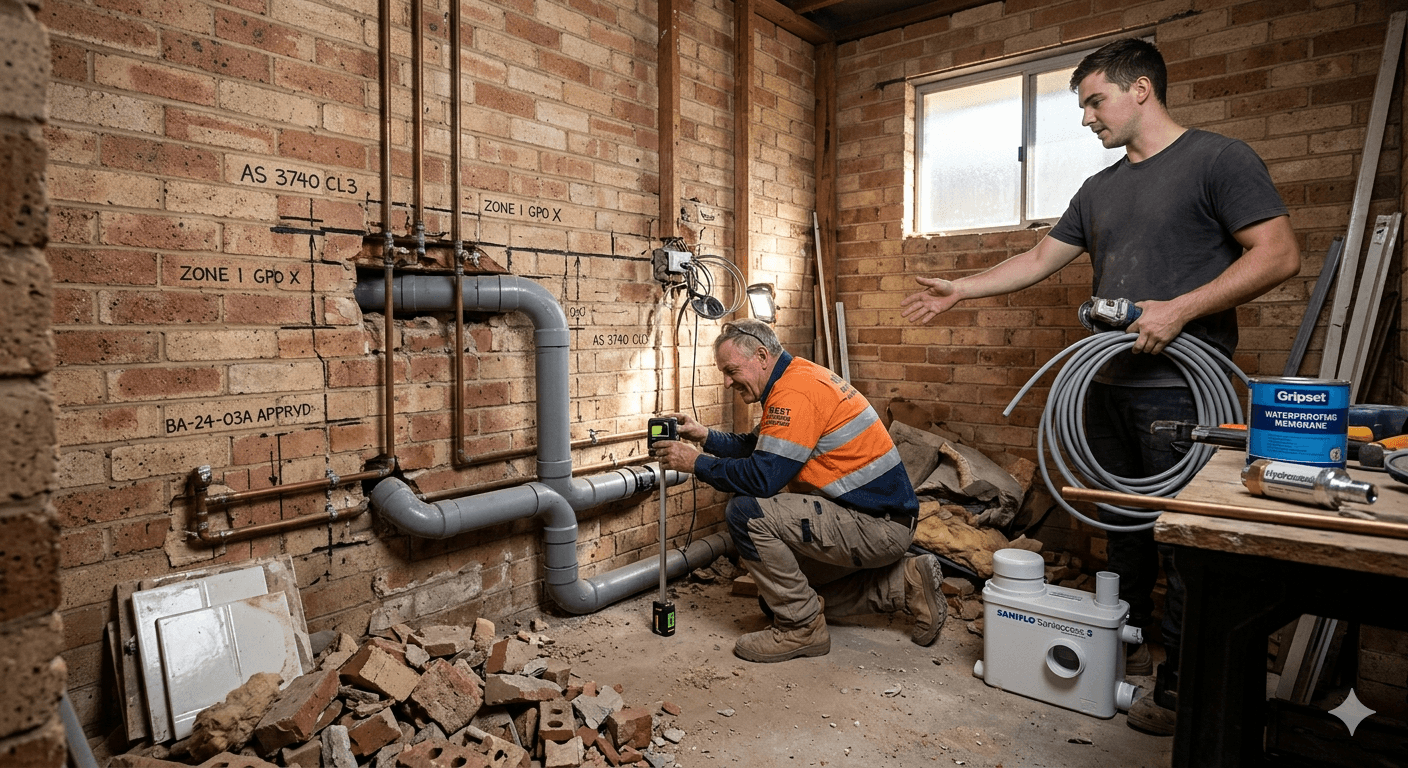
In the quiet, leafy streets of Subiaco or the burgeoning blocks of Alkimos, a specific kind of architectural alchemy is taking place. Perth homeowners are looking at their cramped, lint-covered laundries and seeing something else: a high-yield second bathroom. It’s the ultimate square-metre arbitrage—turning a zone of domestic labor into a sanctuary of high-value utility.
But here’s the cold truth: beneath those Pinterest-perfect European laundry stacks and the brushed brass tapware lies a potential minefield. In WA, a laundry-to-bathroom pivot isn't just a weekend DIY or a simple tile-over. It’s a surgical intervention on your home’s skeletal structure. Before you take a sledgehammer to that old trough, you need to clear the "Audit." These seven red flags are the difference between a seamless equity boost and a structural nightmare that could devalue your home overnight.
1. The "S-Bend" Standoff: When Gravity Isn't on Your SideMost Perth laundries are built for a single purpose: draining gray water through a modest 50mm pipe. The moment you decide to add a toilet, the game changes entirely. A compliant water closet (WC) demands a 100mm junction.
If your laundry sits on a reinforced concrete slab—common in our post-1970s builds—and you don't have easy access to the main sewer line, you’re looking at a "Red Flag" that can cost thousands in trenching.
The Pivot: Don't guess. Have a plumber run a CCTV drain inspection. If the slab is too thick or the fall is insufficient, look into "up-flush" macerator systems. They’re a clever way to bypass gravity without turning your floor into a construction site.
2. The Invisible Kill Zone: Electrical Clearance ChaosIn a compact 2m x 2m footprint, the "Zone 1" hazard is very real. It’s a classic Perth renovation trap: you want the shower in the corner, but the existing power points for the washing machine are right there. Under the AS/NZS 3000 Wiring Rules, the proximity of water to electricity isn't just a suggestion; it’s a life-safety mandate. If your GPO (General Power Outlet) is within 0.6m of the shower zone without a physical barrier, you’ve hit a wall. You'll need to de-energize and reroute circuits, which often means chasing wires through double-brick walls—a messy, expensive necessity.
3. The Suffocation Point: Why the "Doctor" Won't Save YouWe love the Fremantle Doctor for cooling our afternoons, but it won’t vent a windowless internal bathroom. Many old laundries rely on a single, breezy window. When that room becomes a steam-filled shower zone, that window isn't enough to stop black mould from colonizing your ceiling.
If your laundry doesn't have a direct external wall for ducting, you’re looking at a ventilation deficit. The fix? High-powered inline centrifugal fans. It has to lead to an external soffit or a roof cowl—never just vented into the ceiling cavity. If it goes into the roof, you’re just inviting rot into your rafters.
4. The "Hollow" Warning: That Wall Might Be Holding Your RoofThere’s a dangerous temptation in small Perth homes to "open things up." But our double-brick heritage means many of those internal laundry walls are actually load-bearing, supporting heavy roof struts. Give the wall a tap. If it sounds solid and sits directly under a roof ridge, stop. Cracks in the cornice are another dead giveaway. Removing a structural wall without a steel lintel or an LVL beam is the fastest way to sag your roofline and void your insurance. A $500 structural engineer’s report is the cheapest peace of mind you’ll ever buy.
5. The Waterproofing "Cold Joint"Waterproofing failure is the leading cause of building disputes in WA. When you convert an old laundry, you’re dealing with an "aged" slab. The joint where the old floor meets the wall is prone to movement. If you see white, salty crusts (efflorescence) on the outside of your bricks near the laundry, you already have a moisture problem. For a conversion, you need a Class III Membrane system. It’s a liquid armor that must be "wicked" up the walls to at least 1800mm in the shower. Anything less, and you’re just waiting for a leak.
6. The "Hammer" and the SurgeLaundries are high-flow zones. Washing machines gulp water and shut off abruptly, often causing that loud "bang" in the pipes known as water hammer. While a laundry can take the vibration, your delicate new ceramic disc bathroom mixers cannot. If your pipes are already noisy, adding a bathroom will only worsen the surge. Installing water hammer arrestors and pressure-limiting valves at the meter isn't just "extra"—it’s what keeps your expensive new taps from leaking within six months.
7. The Paperwork Trap: DA vs. BA in WAThis is the red flag that catches the "DIY-at-all-costs" crowd. Changing a room's classification from a "non-habitable" laundry to a "wet area" bathroom usually requires a Building Approval (BA) from your local Perth council.
If you sell the house later and the "second bathroom" isn't on the approved plumbing diagram, the buyer’s building inspector will flag it. It can kill a sale in 24 hours. Get a certified building surveyor to sign off on the occupancy permit. It makes you unassailable.
The Inner Voice: What You’re Actually Thinking
Is it actually legal to put a toilet in my laundry here?
Absolutely, as long as you've got the 100mm pipe and you aren't literally touching the washing machine while sitting on the pan. You need about 600mm of "breathing room" in front of the toilet to stay within Australian standards.
What’s the "real" price tag for a Perth conversion in 2026?
If you’re keeping the plumbing mostly where it is, you might get away with $18,000. If you’re cutting the slab, moving walls, and going for high-end stone, you’re looking closer to $32,000.
Do I really need a permit for such a small space?
If you're adding a toilet or moving a wall, yes. The City of Perth (and most surrounding councils) are strict about this. It’s not just about the rules; it’s about making sure your house is still insurable if a pipe bursts.
Want to get some advice from the experts contact Renovation Lane
|
0 Comments
Join the conversation
Be the first to comment
Share your thoughts above.