
Indoor Rock Climbing Perth WA: |
Unleash Your Inner Adventurer with Indoor Rock Climbing in Perth - Discover the Thrill Today! |
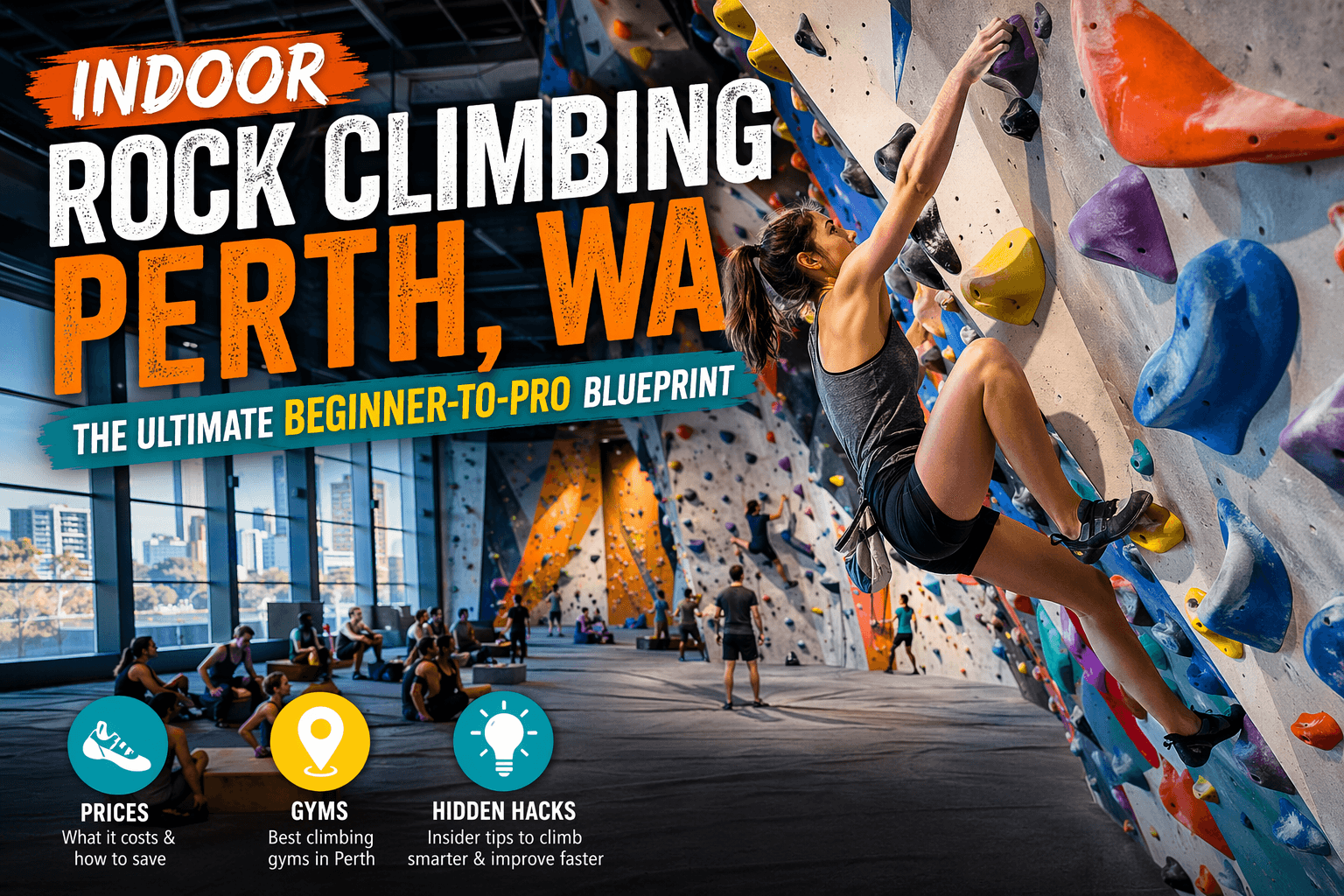
There’s a quiet moment halfway up the wall when everything else fades out. Your fingers tighten around the hold. Your foot searches blindly at first until it lands. For a second, you hesitate. Then you commit. Push. Shift. Reach. And suddenly… you’re higher than you expected to be.
That’s the thing about indoor rock climbing in Perth, WA. It doesn’t announce itself as life-changing. It just pulls you in, one move at a time, until you realise you’re stronger, sharper, and oddly hooked on the climb itself.
If you’re here, you’re probably circling that first step. Wondering where to go, what it costs, and whether you’ll be any good.
Let’s make it simple. Let’s make it real.
Why Everyone in Perth Seems to Be Climbing All of a SuddenIt’s not just a trend. It’s something deeper.
Walk into any indoor climbing gym around Perth and you’ll notice it straight away. People aren’t just working out, they’re engaged. Talking. Problem-solving. Encouraging complete strangers.
Climbing sits in a rare space where fitness meets focus. You’re using your whole body grip, core, and legs, but your mind is doing just as much work.
Every route becomes a question: Can I solve this? And when you do, even halfway, there’s a quiet rush that’s hard to replicate anywhere else. It’s also one of the few environments where beginners and experienced climbers share the same space without friction. Everyone remembers what it felt like to start. That memory creates a kind of unspoken generosity.
And that’s often what brings people back.
Indoor vs Outdoor Climbing (And Why Most People Start Inside)There’s something romantic about outdoor climbing—the cliffs, the open air—but for most people in Perth, the journey begins indoors. For good reason.
Inside, everything is controlled. The routes are marked. The difficulty is graded. The safety systems are built in. You can walk in knowing nothing and still walk out having climbed something real.
Outside, it’s a different world. Gear, weather, technique—it all matters more, and mistakes carry weight.
Indoors gives you space to learn without pressure. To fall without consequence. To figure things out at your own pace.
And for a lot of people, that’s more than enough.
Finding the Right Indoor Rock Climbing Gym in Perth, W.A.
Not all gyms feel the same. Some are loud and social. Others are quieter, more focused. The right one depends less on “best” and more on where you are right now. If you’re just starting out, look for simplicity. Gyms with auto belay systems let you climb without needing a partner. The routes are easier to read. The environment feels less intimidating. If you’ve got a few climbs under your belt, bouldering spaces start to make sense. No ropes, shorter walls, more technical movement. It’s where strength meets creativity. And then there are the performance-focused gyms. Taller walls. Training boards. Climbers who move with intent. You’ll know when you’re ready for that shift—it tends to happen naturally. Most people don’t choose once and stick forever. They evolve. Their gym evolves with them. What It Actually Costs to Climb in Perth(And Where People Overspend)
This is usually where hesitation creeps in. You’re interested, but you don’t want to get locked into something expensive.
Here’s the reality.
A casual session will usually land somewhere between $20 and $35. Enough to try it out without commitment. Gear hire, shoes, maybe a harness, adds a few dollars more.
Memberships are where things shift. If you’re climbing two or three times a week, they quickly become the better option. Somewhere in the $25 to $45 per week range, depending on the gym.
But the real difference comes from the details most people overlook. Off-peak times are quieter and cheaper. Intro offers bundle sessions with gear. Some gyms run multi-visit passes that soften the upfront cost. It’s not about finding the cheapest option.
It’s about understanding how often you’ll actually go and aligning your spend with that rhythm.
Your First Climb: What It Feels Like (Before, During, After)
Before you walk in, there’s usually a flicker of doubt. What if I can’t do it? Then you step inside. There’s a quick check-in. A waiver. Someone shows you the basics and how the system works, where to stand, and what to avoid. It’s straightforward. No pressure.
You put the shoes on. They feel tighter than expected. That’s normal. Then you look up at the wall.
Your first climb isn’t about strength. It’s about curiosity. You reach, test, and adjust. Your movements are awkward at first, but they start to make sense faster than you expect.
And when you come back down, there’s a shift. Not dramatic. Just enough to think, I could do that again.
That’s usually all it takes.
Understanding Climbing Grades Without Overthinking ItAt some point, you’ll notice the numbers.
Different colours. Different ratings. They’re there to guide you, not judge you.
Each route is set with a level of difficulty in mind. Some require more strength. Others demand balance, or precision, or patience.
In the beginning, progress feels quick. You move up grades without overthinking it. Then, eventually, things slow down.
That’s not failure. That’s where real growth begins.
The plateau is part of the process.
Getting Better Faster (Without Burning Out)
This is where people either find their rhythm or lose it.
The instinct is to climb harder, longer, more often. But climbing rewards something different.
Efficiency. Using your legs instead of pulling with your arms. Staying close to the wall. Learning to pause and think before you move. Climbing two or three times a week tends to work best. Enough to build consistency. Not so much that your body gives out. And then there’s watching. Not copying, but observing. The way experienced climbers shift their weight. How little effort they seem to use.
There’s always something to pick up, even when you’re resting.
Classes, Coaching, and That Next Step Forward
At a certain point, curiosity turns into intention. That’s when structured learning starts to matter. Beginner courses help tighten the basics of footwork, balance, and safety. They build confidence quietly, without overwhelming you. Intermediate sessions start refining things. Route reading. Movement efficiency. Understanding why something works, not just how.
And for those who keep going, advanced training becomes more focused. Strength cycles. Technique drills. Even competition prep.
You don’t need to rush into any of it. But it’s there when you’re ready. Why Climbing Sticks (Even When Other Fitness Habits Don’t)
There’s a reason people drift in and out of gyms, but stay with climbing. It taps into something more than routine.
You can feel improvement almost immediately. Not just physically, but mentally. Routes that once felt impossible start to open up.
There’s also identity. Subtle at first. Then clearer.
You’re not just someone trying a new activity. You’re someone who climbs.
And then there’s the community. The familiar faces. The shared wins. The quiet encouragement from someone you’ve never met before. It’s hard to walk away from that once it settles in.
The Questions People Don’t Always Say Out Loud
Is this actually safe, or am I missing something?
Do I need to be strong before I start?
Is it expensive long term?
What if I feel out of place?
How often should I go?
Top Places In Perth To Go Indoor Rock Climbing
Caution: Before trying indoor rock climbing, it’s important to take responsibility for your own safety and well being. While climbing gyms are designed with safety systems in place, the activity still carries physical demands and risks. Make sure you follow all instructions provided by the facility, use equipment correctly, and consider speaking with a qualified professional or instructor if you’re unsure where to start. If you have any existing injuries or health concerns, it’s always wise to consult a medical or fitness professional beforehand to ensure climbing is appropriate for you.
|
0 Comments
Join the conversation
Be the first to comment
Share your thoughts above.